Tennis isn’t the most popular sport.
While the viewing figures for Wimbledon last year peaked at 25.5 million globally, it’s watchability is dwarfed by other high-profile annual sporting events:
The Superbowl: 100 million
Mens Champions League Final: 400 million
The Mens Football World Cup Final: 1.12 billion
There are lots of people at the LTA and across broadcasting talking about ways to boost the popularity of the game: grassroots initiatives, more exhibition matches, more money (thanks Saudi Arabia) and just more tennis (because bigger is better).
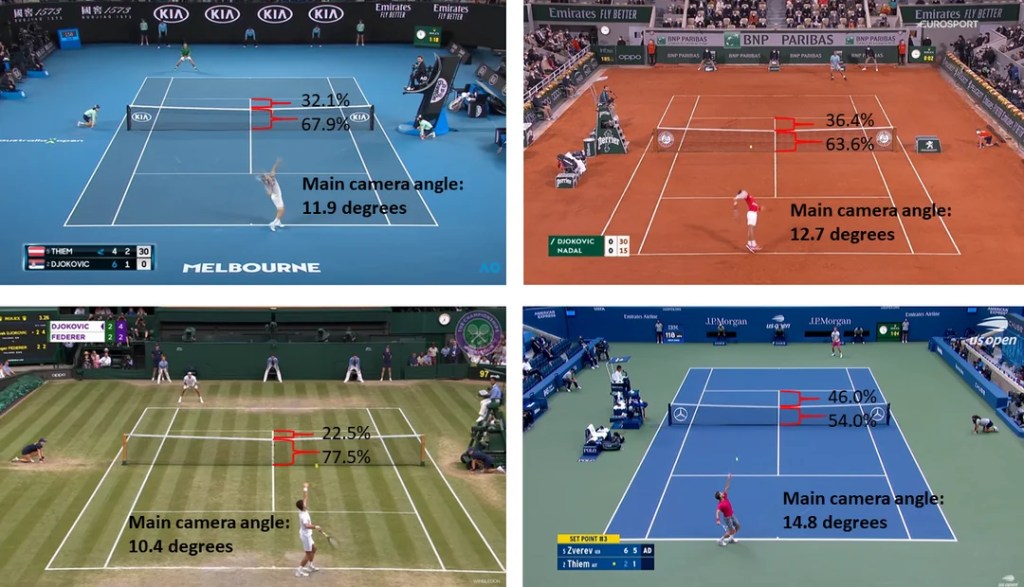
To me, there’s one simple way that will boost viewing figures – for free: lower the angle of the camera.
Right now, tennis broadcasts often rely on an elevated, almost bird’s-eye view. It’s very picturesque, sure, but it also feels like we’re watching the match from a distance – like we’re sitting on a hill outside the stadium with a pair of binoculars, trying to figure out what’s going on.
The players look tiny, the ball zips around and we’re left wondering, “Did he actually make that shot? I think I missed it.” It’s all a bit detached.
If the camera angle were just a little lower, the whole experience would change.
Wimbledon is widely considered the most globally-watched tennis tournament, attracting millions of viewers from all over the world every year. In 2023, the tournament drew a peak global audience of 25.5 million, making it the most-watched tennis event on the planet.
While this figure is impressive, part of Wimbledon’s broad appeal can be attributed to the way it’s presented on television.
The tournament uses a lower camera angle than most other tennis broadcasts, which allows viewers to feel more connected to the action. This closer, more intimate perspective brings the players, the ball, and the energy of the game right into viewers’ living rooms, offering a more engaging experience than the distant, elevated shots used by other events.
It’s the same reason why we love watching football or rugby – the action is up close, you feel like you’re right there with the players. That’s the thrill, the intensity, the excitement. Tennis should have that too.
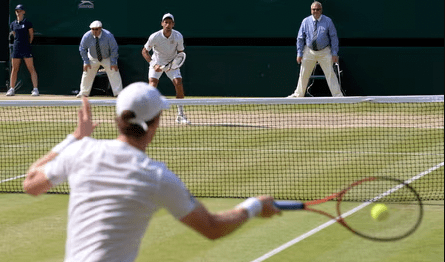
It’s no coincidence that Wimbledon’s viewership consistently outpaces other tennis tournaments – the presentation not only enhances the spectacle but helps to create a connection that resonates with its global audience.
In fact, you can directly link the height of the camera angle with the viewing figures of each of the four grand slam finals:
Wimbledon: 25.5 million – camera angle: 10.4 degrees
French Open: 7 million – camera angle: 12.7 degrees
Australian Open: 1.3 million – camera angle: 12.9 degrees
US Open Final: 1.25 million – camera angle: 14.8 degrees
It makes sense. A big part of the reason people love Wimbledon is about the atmosphere. When they say “atmosphere” this is of course created by several factors. The closeness of the seats, the confined space, the old architecture, tradition and colour scheme (green grass / white outfits).
But it’s also about the position of the camera. It’s in the crowd, sometimes blocked by the heads of the spectators bobbing up and down in excitement – just like if your own view had been obscured.
You can compare this feeling to another of England’s greatest exports: The Premier League.
There are many reasons English football is the most popular in the world. It’s not the skill of the players, Bellingham, Mbappe and Vinicius (the three most exciting attacking players in the world right now) all play in Spain.
It’s not the popularity of the teams. While Liverpool, Arsenal and Manchester United are 3 of the most popular clubs globally, Real and Barcelona can easily compete – particularly among Latin American audiences.
It’s not the success of the teams either. Man City and Liverpool aside, English success in winning the Champions League in recent years is still far less common than our German or Spanish rivals.
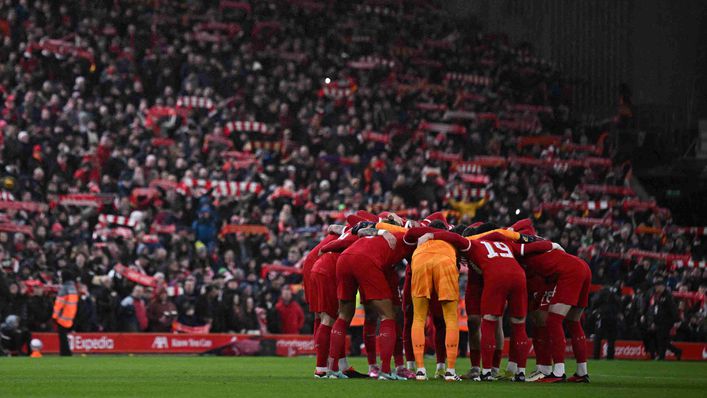
Then why? It’s because of the product. It’s because of the atmosphere, the fact every seat is full, the singing, the yelling and the narrative.
It’s because wherever you go in the Premier League, you know the stands will be full, the production will be slick and the analysis and narrative executed to perfection.
In Italy and Spain at least, this is not the case.
It’s the same with Wimbledon.
People watch it every year – yes because it’s the oldest, most respected tennis tournament in the world. But also because of the package, the branding and yes, the camera angle ! All this adds up to create an intense spectacle that make us feel as though we are there, we are invested and we care.
In short, it makes it feel real. And that is what sport is all about.
 Off The Post
Leave a comment